

Title: How Kyoto Breaks Your Heart
Author: Florentyna Leow
First Publication Date: February 23, 2023
Genre: Non Fiction, Memoir, Essays
Rating: ☕☕☕☕☕︎ (4.5/5)
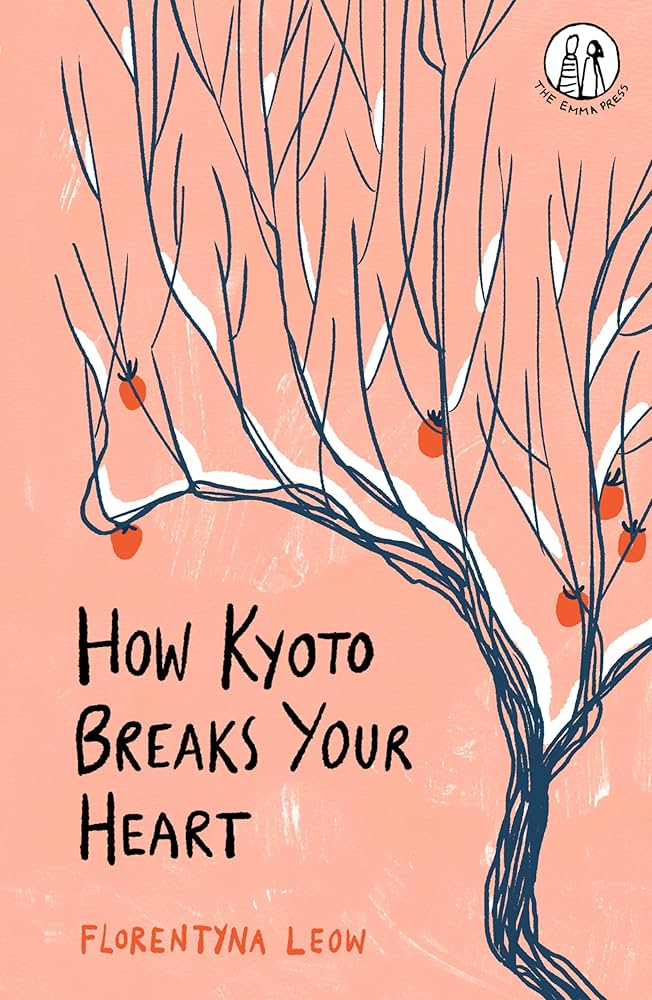
Blurb
How Kyoto Breaks Your Heart is a collection about the ways in which heartbreak can fill a place and make it impossible to stay.
It is early October now, a warm, sunny afternoon with a dreamlike cast, and we’re harvesting persimmons. The tree is still lush and green; in a few weeks it will be bare, scattering leaves in a brilliant carpet of mottled tangerine and vermillion. She shimmies up the ladder and snips away at the fruit-laden boughs with red shears. I catch them – mostly – and prise the persimmons from the branches by their calyxes. If I close my eyes I can still hear our peals of laughter, her yelps and curses as some fruit falls into the roof gutters.’ (via Goodreads)
Thoughts
It’s been a while since I dedicated a post to a book on this blog, but I feel like this one in particular deserves a space here. I finished How Kyoto Breaks Your Heart by Florentyna Leow this March. I savored this 96-page book oh so slowly. A random find that ended up being one of the most beautiful things I’ve read lately, it’s my my favorite in 2025 so far.
When I read the foreword, it already captured my heart – an indicator that I will be in for an emotional ride. This collection is made up of travel- and food-inspired essays, with the thread of a particular friendship breakup tied to Kyoto running through almost all of them. It is indeed “a collection about the ways in which heartbreak can fill a place and make it impossible to stay.” How someone can make a city and, also, break it. It seems crazy if you think about it: that a person can hold that much power. But some relationships color your view of the world so deeply that their absence (whether metaphorically or literally) can shift how you experience a place.
Leow vividly captures that feeling of falling in love with a place (and its people), then describes— with heartbreaking accuracy—the slow unraveling (or maybe it happens all at once) that leads to disillusionment. The kind that makes you leave a ‘home’ behind. Like growing out of it—inevitable. It’s a meditation on friendship and finding your place. On appreciating the little things, and learning how to build a life for yourself.
“To love a place is to love its people, and to love a place is to let it break your heart.”
Here are five of my favorites from the 12 essays in this collection:
- Persimmons – this is the first essay in this collection and it set the tone of the whole book. Aside from the idea of home and building a life for yourself in a foreign place, I think the other major vein that ran through this collection was Leow’s friendship breakup, told painfully through a series of vignettes that forces the reader to realize the difference of the before and after.
“We take turns becoming the one who leave. We make ghosts of ourselves and the ones we once loved. Like seasons, we change, we transition into the next life. We try and fail to forget. We grow, outgrow and are outgrown. But none of it ever, ever seems to hurt any less.
- Some Small Dive – on finding a special place that feels just yours. She narrated finding a random kissa (or kissaten, a japanese cafe) that ended up becoming her ‘third space‘. The way she described it made me feel like I was experiencing it with her: the discovery of the place, settling into its quiet comfort, the daily amusing conversations, and the random people she met in the kissa that ended up ‘casually knowing’ her through the years she spent there. “It was the kind of space you would dream of in monochrome.” – I loved how she talked about this place – like loving a place so much but not wanting to make it known so you could hold it close to your heart a little longer. I want one, too.
“We all have our own corners of the earth we run to.”
- How Kyoto Breaks Your Heart (III) – all because of how this quote pretty much sums up what I’ve been feeling lately. Here’s to words that seemingly bares the inner workings of you mind so accurately it hurts. 😭
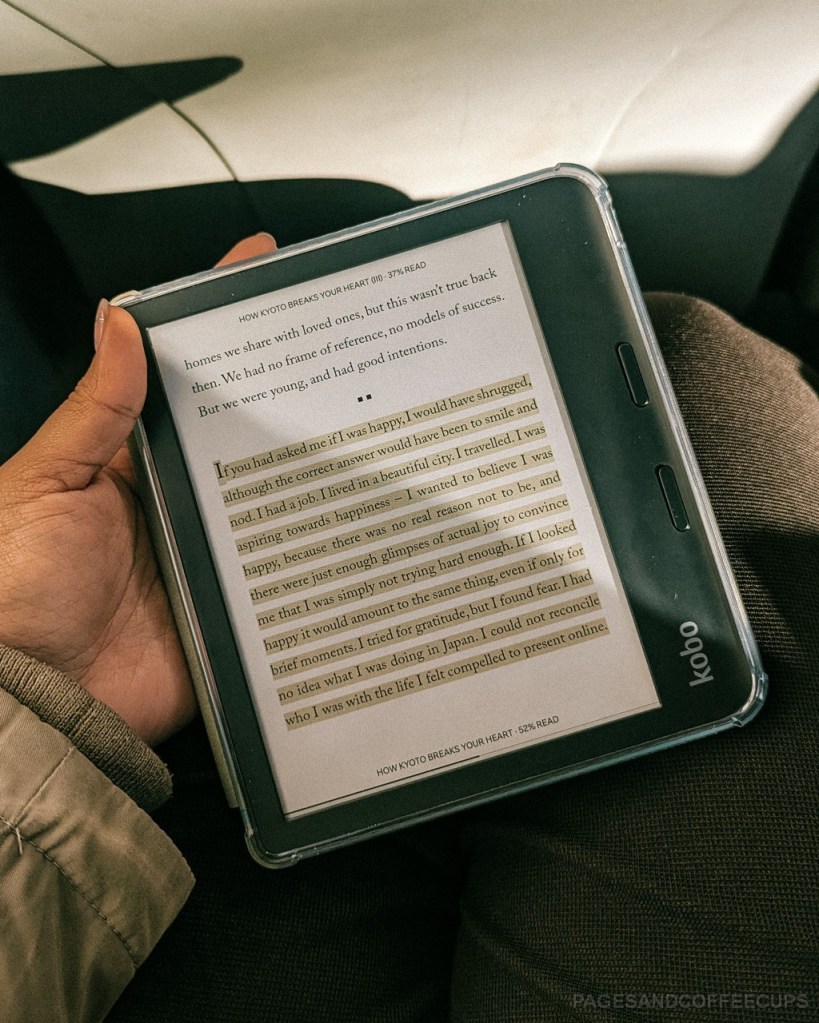
- A Bowl of Tea – a celebration of tea and the people that make it an experience. I fell in love with the ceremony of it all, how it forces you to be mindful of all elements in it: the careful selection of the charcoal used to boil the water slowly, the water used, the scroll that hung in the room where the experience is to be held, the garden, and all the seemingly small things (but nonetheless significant) that elevate the experience. It all made me put ‘attending this specific type of tea ceremony in Kyoto (“chaji”, a formal tea event)’ in my bucket list. The description of “koicha” (thick tea) alone made me stop in awe: “If you could drink a typhoon rushing through a tea farm in spring, perhaps this might begin to describe koicha. Overwhelming by design, it demanded my attention. A single mouthful lingered on my tongue like an aged wine. I wanted to drink it all.“
- How Kyoto Breaks Your Heart (V) – Continuing the theme of friendship breakups, Leow brought up an interesting point: the idea that a relationship can have an expiry date (something another person’s once told her). It was likened to the terms Japanese use for food that have gone past the ‘best before date: there is ‘shoumikigen‘ (limit of taste), where it is still edible but it wound taste good anymore. And then there’s the other one: “shouhikigen” – a real expiry date; the point after which something is no longer usable and has to be thrown out. I can’t stop thinking about it. Also, this quote about moving as a means of escape:
“I was so ready to leave Kyoto. I was ready to run away again.“
- Rainy Day in Kyoto – I particularly liked this essay – one that reflects upon Makoto Shinkai’s The Garden of Words and how it explores the “traditional concept of love as described over a thousand years ago – koi, to long for someone in solitude.” I loved that so much and it made me want to rewatch the movie again (this and 5 Centimeters Per Second are two of my favorite movies of his). It was also amusing (and, personally, deeply romantic) to know that the Japanese have all these different types of rain, and the words for them – I am forever a sucker for pretty words, but words that depict the various nuances of one of my favorite things in the world? (i.e., the rain) Not gonna lie, this is right up my alley. Also, this: “Here’s a photo I would’ve sent you” – one of the saddest sentence in here.
Admittedly, a huge factor in how much I liked this book is where I was in life when I read it (and still am). Reading her essay, more often than not, felt like they were reflecting my current feelings back at me. And isn’t that what anyone wants when they read things like these? A sense of connection, of sameness, of feeling that you are not alone and that there are other people who experience what you experience. I think that’s one of the beauties of seeking out books that speak to you – they provide a certain kind of comfort. And that is exactly what How Kyoto Breaks Your Heart gave to me. It’s crazy when you encounter things right when you need them. It was bittersweet finally finishing this book because it meant it wouldn’t be accompanying me in my quiet evenings anymore. But I’m a better person for having read it. 🤍
Rating
A side note: Egg Love, the last essay in this collection, felt a bit out of place for me (or at least, misplaced). I am someone who is very much influenced by how something ends, as it usually leaves the most impact. I think this essay collection would’ve been stronger if it ended with ‘How Kyoto Breaks Your Heart (VI)’ instead, the second to the last essay. “It’s going to be alright. […] You’re going to be alright.” – those ending paragraph(s) made me ugly cry.
Quotable Quotes
(Aside from those I’ve listed above, my favorites:)
What does home mean when you emigrate? What does it mean to find home elsewhere? What if you keep leaving – what then?
“Everything was fresh and new, like being in love. Moving here was not my idea. I had no idea what I was signing up for. But I said yes to this city.” – How Kyoto Breaks Your Heart (I)
“This is the price of leaving: you will always be late to the news, you will always miss the most important and unexpected moments of the lives you left behind, and you will always come back to a place that went on changing without you. I was already familiar with it. I’ve done it so many times. I was going to do it again.” – How Kyoto Breaks Your Heart (VI)
“We leave broken eggshells behind us all the time; the point is to make them count. – Egg Love
GET THE BOOK >>Emma Press (Publisher) | Waterstones | InPress Books | Amazon
About the Author

Florentyna Leow is a writer and translator. Born in Malaysia, she lived in London and Kyoto before moving to Tokyo. Really, though, she lives on the internet. Her work focuses on food and craft, with an emphasis on under-reported stories from rural Japan, like English Toast (neither English nor toast), a shrine dedicated to ice, and Japan’s rarest citrus. She cannot go five minutes without thinking about food. How Kyoto Breaks Your Heart is her first book. She can be found @furochan_eats on Instagram and Twitter, or at www.florentynaleow.com
FIND ME ELSEWHERE: THREADS | INSTAGRAM | GOODREADS | STORYGRAPH | Substack Newsletter
IF YOU LIKED MY CONTENT, PLEASE CONSIDER BUYING ME A KOFI.
 Pages and Coffee Cups
4 responses to “Review: How Kyoto Breaks Your Heart by Florentyna Leow”
[…] Riza @ Pages and Coffeecups reviewed How Kyoto Breaks Your Heart by Florentyna Leow […]
LikeLike
How interesting. I’ll add this to my TBR list. ^_^
LikeLiked by 1 person
[…] Tiny Moons, which I discovered because it was from the same publisher as another favorite, How Kyoto Breaks Your Heart. It was a short but very sweet offering (92 pages!) but I read this oh so slowly. It was a nice […]
LikeLike
[…] at the Morisaki Bookshop | Five Tuesdays in Winter | How Kyoto Breaks Your Heart | In Search of Perfumes | The Emperor of Gladness | Grief is the Thing with Feathers | The […]
LikeLike